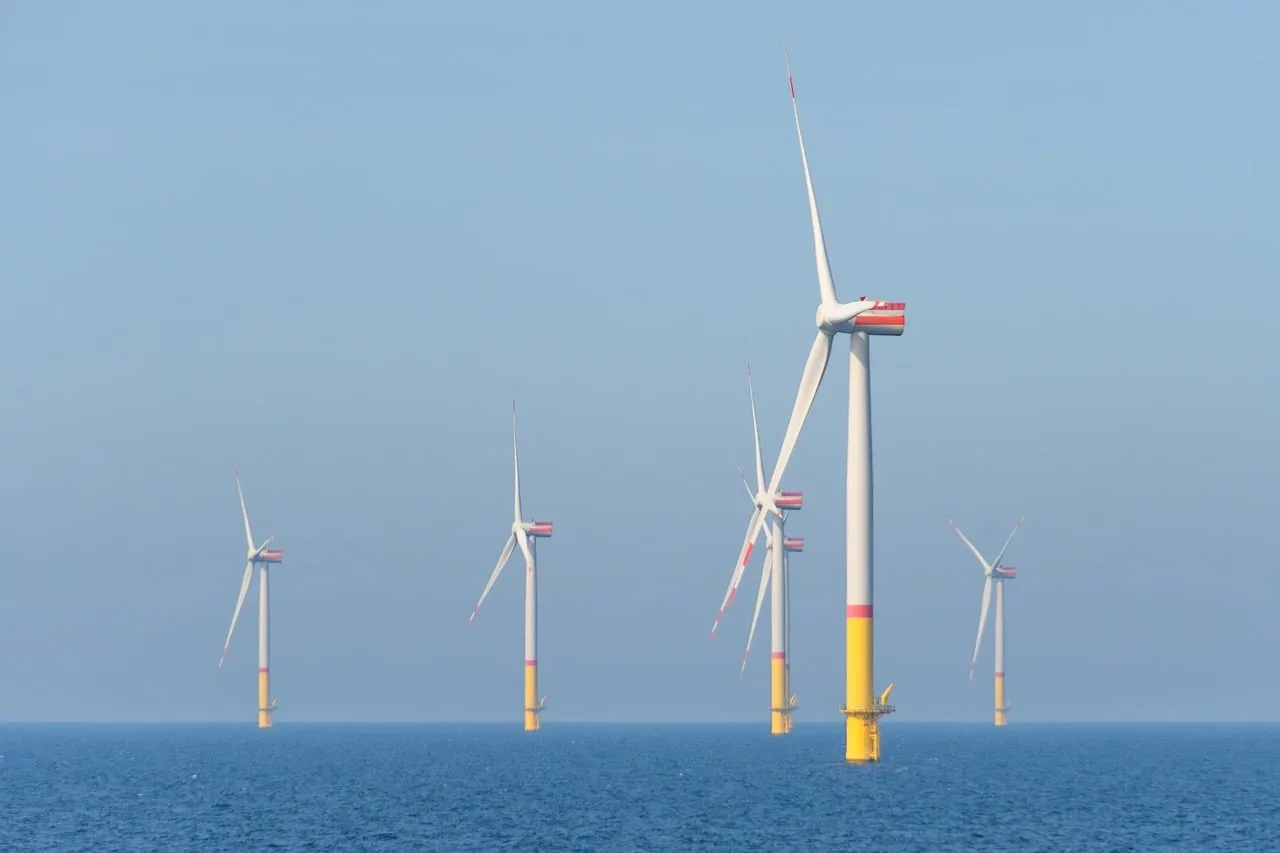
POSCO E&C has signed a contract worth about 297.4 billion won for an offshore wind power project and will start construction this month off the coast of Gochang, North Jeolla Province. The contract makes the company solely responsible for engineering, procurement and construction (EPC) of a 76.2MW plant. This article dissects the structure and significance of the deal through three figures: construction cost, capacity and completion date.
POSCO E&C said on the 12th that it had signed a construction contract for the "Gochang Offshore Wind Project" and will begin work in November. According to industry sources on the 13th, the project involves building an offshore wind power plant that generates renewable energy from the wind off the coast of Gochang County, North Jeolla Province. The company's target is to complete the plant and begin commercial operation at the same time, in August 2029.
The starting point of the dissection is the company's official announcement. The company disclosed three key figures: total construction cost of about 297.4 billion won, generation capacity of 76.2MW, and a completion and commercial operation target of August 2029. Some reports gave the construction cost as 294.7 billion won. However, most reports relaying the company's announcement agreed on about 297.4 billion won, so this article uses that figure.
First, consider the nature of the amount. The roughly 297.4 billion won is not a simple construction fee but the total construction cost. POSCO E&C will handle the entire process, from plant design to equipment procurement and on-site construction. Because this is an EPC arrangement, in which a builder takes responsibility from the drawing stage to completion, the cost includes the design and procurement portions. Unlike a structure in which the process is split among several companies, the entire contract amount falls within the scope of work of a single company.
Next is the timeline. Construction begins in November this year, with completion targeted for August 2029. Because this is a long, multi-year process, the roughly 297.4 billion won will not be spent all at once at the start of construction. It will be injected in installments in line with progress through August 2029. The company set the completion date as the same day as the start of commercial operation. Therefore, if construction is delayed, the start of power generation will be pushed back as well.
Last are capacity and use. According to the company, power from the 76.2MW plant will be supplied as renewable energy to advanced industries in the southwestern region. This creates a structure in which the sea wind off Gochang becomes a power source for the southwest's advanced industries.
Taken together, the three figures reveal the significance of the contract. POSCO E&C has taken on the entire process, from design to completion, for a single offshore wind plant on its own. It has moved beyond a construction-only role to a position of taking responsibility for a renewable power facility from start to finish. The roughly 297.4 billion won amount reflects the scale of that responsibility. The remaining key question is whether the company can carry out the work starting this month without setbacks through the August 2029 target and connect it to commercial operation.